Best Time to Visit Gir National Park: A Complete Seasonal Guide for Wildlife Lovers
“You’ve only got a couple of moments… Look at your right!”
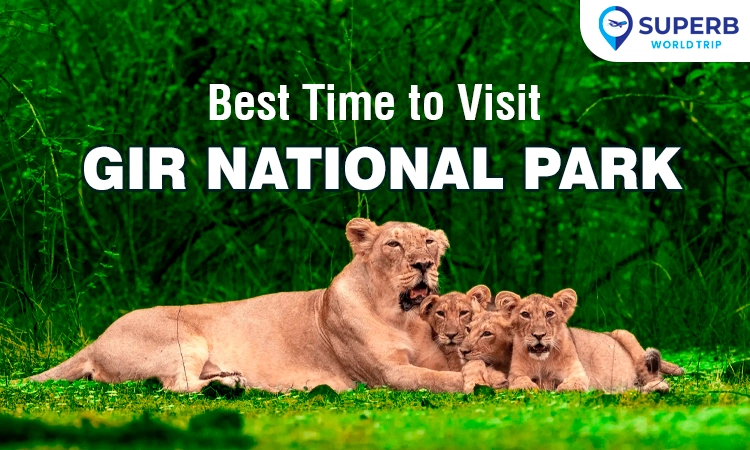
Our guide on safari whispered the words so quietly that I could not have noticed the event. Under the shade of a huge acacia tree was a magnificent Asiatic lion.
Instead of the roaring lions you see in many documentaries about wildlife, this one was sitting there, gazing at the forest in a calm manner.
No one in the jeep spoke.
The camera shutter’s sound was too loud for this serene moment. We were able to observe the lion for about five minutes before it slowly got up and disappeared into the forest.
When we returned, I asked the guide how many tourists would get to encounter lions in this way.
He smiled and said,
“That is contingent on the time you visit Gir.”
His words were a constant reminder throughout the trip.
Before I visited Gir National Park, I thought that sightings of wildlife depended solely on luck. Although luck is certainly a factor, I realised that the time of year you pick will have an impact. The conditions, the movements of animals, the state of the forest, and the experience at the safari can change over the season.
The park is located in Gujarat; Gir National Park is the only location anywhere in the world where one can observe Asiatic lions roaming free in the wild. In addition to there being lions in the park, it hosts leopards, striped hyenas, the nilgai, crocodiles, and jackals, as well as sambar deer, spotted deer, and wild boars, plus more than 300 different species of birds.
Each season brings a unique experience. Winter brings cooler temperatures and comfortable safaris. Summer can increase the chance of seeing the lions in water areas, and the monsoon gives the forest a chance to recuperate before opening up to tourists.
When is the ideal time to go to Gir National Park?
The answer will depend on what type of experience you’re hoping to have. If your goal is to spot an Asiatic leopard, enjoy the family holiday, take photos of wildlife, or explore Gujarat’s famous wilderness, this guide will assist you in choosing the best time of year.
Best Time to Visit Gir National Park
For the majority of travellers, most people, the best time for visiting Gir National Park is from December through March. In these months, the temperature is cool and pleasant, which makes jeep safaris enjoyable and comfortable. The temperatures in the morning are pleasant, while afternoons are pleasant and wildlife is active throughout the day.
If your main goal is to improve your odds of seeing the Asiatic lion, a lot of experienced wildlife guides suggest visiting between April and May. While these months are warm, wildlife tends to congregate near waterholes and rivers, making the chances of seeing them increase.
In the simplest form:
- A pleasant winter: December through March
- The best lion sightings are in May and April
- Park closed from mid-June until Mid-October (monsoon season)
Gir National Park in Winter (December to March)
If I had to suggest only one season to a new visitor, winter would be it.
Our safari started just after sunrise. Cool breezes, golden light filtered through the teak forests, and the distant chirps of peacocks created a mood that was completely distinct from the city.
In the first half hour, we saw chital deer, a family of langurs running between trees, peacocks flapping their feathers in a colourful display, and, finally, the lion, who brought the whole trip to a new level.
Winter isn’t just comfortable for those who visit but also perfect for wildlife photography. The natural light and soft, warm weather make long safaris pleasurable without feeling exhausted.
Weather
- Temperature: 10°C to 28°C
- Cool mornings
- Good afternoon
- Low humidity
Why Visit During Winter?
- The most comfortable time to go on safari.
- Wonderful wildlife photography.
- Perfect for families as well as older adults.
- A pleasant day to go on a tour.
- Perfect for birdwatching.
Gir National Park in Summer (April to Mid-June)
I’ll admit that I was not thrilled when I looked up the forecast for the weather prior to my return visit.
41degC.
It sounded a bit off.
Our guide was joking and said something that I’ll never
“The heat is more bothersome to us than the lions.”
When temperatures increase, the natural water sources start to shrink. Deer, lions, leopards, and other wildlife frequent the remaining rivers and ponds more frequently, which increases the chance of seeing them.
Yes, afternoons can be scorching, but the reward is worth it, especially in the event that you see an Asiatic lion high on your bucket list.
Weather
- Temperature: 28°C to 42°C
- Hot afternoons
- The warm mornings are here
Why Visit During Summer?
- The highest chance of seeing lions.
- Animals congregate near the water sources.
- Better visibility because of sparse vegetation.
- There are fewer tourists in winter than during the summer.
Travel Tips
- Reserve the first safari in the early morning.
- Wear cotton-like clothes that are light-coloured.
- Make sure you have plenty of water to drink.
- Take sunglasses, sunscreen, and the requisite sun hat.
Gir National Park in Monsoon (Mid-June to Mid-October)
When I informed an auto driver from the area that I would like to go to Gir during the monsoon season, I was greeted with a smile, and he said,
“You are welcome, but the lions also need a break.”
I initially laughed, but I later understood what he was saying.
Each year, Gir National Park closes during the monsoon to let the forest recover naturally. The heavy rains transform the deserted land into lush green. Rivers flow again as the season of breeding gets underway for many animals.
Although visitors may need to wait for a couple of months for their next trip, this closure plays a crucial role in safeguarding Gir’s special ecosystem.
While the main safari is closed, the nearby villages and the surrounding countryside become stunningly picturesque. If you’re already travelling through Gujarat and are still in the area, you’ll be able to be awed by the serene environment, local culture, and delectable Kathiawadi food.
Weather
- Temperature: 25°C to 34°C
- Moderate to heavy rain
- High humidity
Why the Park Closes During Monsoon
- The protection of wildlife is essential during the breeding season.
- Helps prevent damage to roads in forests.
- Lets vegetation regenerate naturally.
- This ensures that you have a safe safari experience when it is reopened.
Month-by-Month Guide to Visiting Gir National Park
Each traveller is not pursuing the same goals. Many want to see lions, while others prefer pleasant weather, and photographers usually seek out the most favourable lighting conditions. This is what every month has to offer.
December
The park feels refreshed since it reopened, and the cool temperatures make every trip enjoyable.
Best For:
- Families
- First-time visitors
- Photography of wildlife
January
The month of January is one of my favourite months. The cold mornings and the forest look stunning, and wildlife is busy throughout the day.
Best For:
- Lion sightings
- Birdwatching
- A comfortable safari
February
The pleasant temperatures continue and make it an excellent month, one of the busiest times for tourism.
Best For:
- Couples
- Family vacations
- Jeep safaris
March
The temperature gradually gets warmer, and animals spend more time near water sources.
Best For:
- Wildlife enthusiasts
- Photography
April
The best month to spot Asiatic Lions on the loose.
Best For:
- Lion sightings
- Expert wildlife photographers
May
The summer months are the hottest in the safari season and often one of the most rewarding months for those who love wildlife.
Best For:
- Big cat enthusiasts
- Photographs of wildlife with serious intent
Mid-June to Mid-October
The park remains closed due to the monsoon.
Best Time to Spot Asiatic Lions
Let’s face it.
Nearly everyone visits Gir with a single goal in mind: to be able to see an Asiatic lion.
While no one can guarantee that you will see a lion, your odds are significantly higher in spring and summer.
In the summer months, it is hot:
- More often, lions go to waterholes.
- Dry vegetation helps them be easier to spot.
- Safari guides can track fresh pugmarks better.
- Animals are more likely to rest in open spaces during the early morning.
In the end, patience remains the most important aspect of any safari.
Sometimes the forest will reward you instantly.
Sometimes, it is necessary to wait a while.
This is what makes each encounter with nature special.
Best Time for Birdwatching
While Gir is known for its lions, it also awes guests with its abundant birdlife.
The best months to observe birds are from December through February, during which winter visitors can be seen alongside the species that live in the park.
Common sightings include:
- Crested Serpent Eagle
- Paradise Flycatcher
- Indian Pitta
- Painted Stork
- White-bellied Minivet
- Peafowl
- Kingfishers
- Woodpeckers
Morning safaris typically offer the most birdwatching opportunities.
Jeep Safari Experience
The thing that I truly liked in Gir was how comfortable the safari was.
In contrast to national parks that see cars rush from one spot to the next, Gir encourages visitors to slow down and enjoy the forest’s beauty.
Even when we weren’t gazing at lions, there was activity going on all around us.
Langurs and their families played among the treetops.
A herd of spotted deer drove across the roadway.
Peacocks danced in the morning light.
A crocodile sat quietly next to the water’s edge of a small body of water.
After the safari, I realised that there was something significant.
The lion was the main attraction of the trip, but it was not the only reason I loved Gir.
The entire forest was in its own rhythm, and just being there was a unique experience.
Safari Timings
Safari timings can vary somewhat throughout the year; however, they generally adhere to this calendar.
| Safari | Approximate Timing |
| Morning Safari | 6:30 AM – 9:30 AM |
| Mid-Morning Safari | 9:30 AM – 12:30 PM |
| Afternoon Safari | 3:00 PM – 6:00 PM |
Morning safaris are typically the most enjoyable because the temperatures are cooler and the wildlife is more active.
Afternoon safaris can be enjoyable in summer, particularly close to water sources.
Where to Stay Near Gir National Park
The majority of visitors reside within Sasan Gir, the small town situated near the main entrance to Gir National Park.
There is a place for everyone’s budget, which includes:
- Luxury resorts for wildlife
- Mid-range lodges in the jungle
- Budget hotels
- Family house-stays
If you can, try to stay for a minimum of two days. This allows you time to experience multiple safaris as well as discover the nearby sights without feeling overwhelmed.
Helpful Travel Tips
Simple tricks will help make your Gir adventure even more enjoyable.
- Reserve your safari permit in advance.
- You must carry an acceptable photo ID.
- Wear earthy-toned clothes like brown, olive green, or beige.
- Be careful not to make loud noises while on safari.
- Your mobile phone should be in silent mode.
- Use binoculars to observe birds.
- Bring a camera equipped with a zoom lens if you are a fan of wildlife photography.
- Follow the guide’s directions always.
My Final Thoughts
When we made our way back to the gate to the park, I gazed out over the forest for the last time.
There was no one in sight.
There was not a single safari.
Read similar content
Latest Post

15 Best Places to Visit in Georgia: Places You Should Not Miss

Best Places to Visit in Australia: Should Add to Your Travel List

15 Best Places to Visit in Greece: Should Not Miss

Best Places to Visit in Sri Lanka: 15 Beautiful Places to Add to Your Itinerary

Best Places to Visit in Switzerland: 15 Beautiful Places You Should Not Miss

Best Train Journeys in India: Scenic Routes to Explore

Best Places for Stargazing in India: Top Spots to Visit

Best Places for Paragliding in India: Top Destinations

Best Places for Scuba Diving in India: Top Spots to Explore

How to Reach Spiti Valley: By Road, Train & Air

How to Reach Badrinath: By Road, Train & Air

How to Reach Lakshadweep: By Flight and Ship

How to Reach Kedarnath: By Road, Train & Helicopter

How to Reach Andaman and Nicobar Islands

15 Top Places to Visit in Matheran: Viewpoints, Lakes & More
15 Top Places to Visit in Jhansi: Forts, Temples & More

15 Top Places to Visit in Srisailam: Temples, Nature & More

15 Top Places to Visit in Pachmarhi: Waterfalls, Caves & More

15 Top Places to Visit in Kodaikanal: Lakes, Hills & More