Best Places to Visit in Australia: Should Add to Your Travel List
Australia is the kind of country that can easily make one trip feel like several completely different holidays. You can spend a morning exploring a modern city, drive a few hours and find yourself surrounded by wild coastline, or fly north and end up in a tropical landscape unlike anything in the southern part of the country.
Then there is the sheer variety of experiences. Australia has famous beaches, ancient landscapes, coral reefs, rainforests, national parks, wildlife, lively cities and some of the world’s most scenic road trips.
Sydney is often the first place people think of, but there is much more to see beyond the Opera House and Harbour Bridge. Melbourne has a completely different personality, Queensland offers tropical adventures, Tasmania feels wonderfully wild, and the vast landscapes of the Northern Territory give you a glimpse of Australia’s ancient heart.
Because Australia is so large, the biggest challenge is not finding somewhere beautiful to visit. It is deciding where to go first.
If you are planning your first Australian holiday, here are some of the best places to visit in Australia.
1. Sydney
Sydney is an obvious starting point, but there is a reason it remains one of Australia’s most popular destinations.
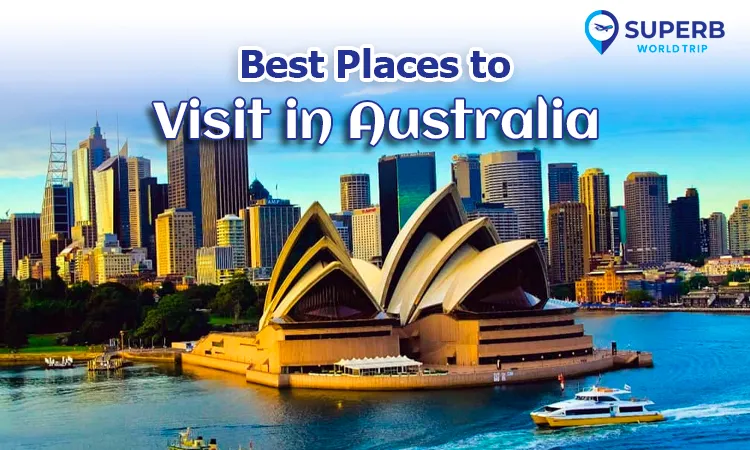
The city has one of the most recognizable skylines in the world, with the Sydney Opera House and Sydney Harbour Bridge overlooking the water. Seeing them in person feels different from seeing them in photographs.
Start with a walk around Circular Quay before exploring The Rocks, one of the city’s oldest neighbourhoods. From there, you can walk towards the Opera House and enjoy views across the harbour.
Sydney’s beaches are another major attraction. Bondi Beach is the most famous, but the coastal walk from Bondi to Coogee is arguably one of the best ways to experience the city. The route passes beaches, cliffs, parks and viewpoints along the coastline.
If you have extra time, take a ferry across the harbour. Even an ordinary ferry ride can turn into one of the most enjoyable sightseeing experiences in Sydney.
Don’t miss: Sydney Opera House, Sydney Harbour Bridge, The Rocks, Bondi Beach and the Bondi to Coogee walk.
Best for: First-time visitors, families, couples, beaches and city breaks.
Ad placement: A hotel booking, airport transfer or Australia travel insurance ad fits naturally here.
2. Melbourne
Melbourne has a completely different personality from Sydney.
It is known for its cafés, street art, galleries, sporting culture, restaurants and neighbourhoods full of character. It is the sort of city where you can spend an afternoon with no particular plan and still find plenty to do.
The laneways around the city centre are a good place to start. Many are filled with cafés, small restaurants, independent shops and colourful street art.
Federation Square and the Yarra River are also central to the city’s atmosphere. Sports fans can visit the Melbourne Cricket Ground, while art lovers have plenty of museums and galleries to explore.
Melbourne also makes a fantastic base for day trips. The Great Ocean Road is one of the most famous options, while the Yarra Valley is popular with travellers interested in food and wine.
Don’t miss: Federation Square, Melbourne laneways, Queen Victoria Market, the Yarra River and the Melbourne Cricket Ground.
Best for: Food lovers, culture, shopping, couples and city travellers.
3. Great Barrier Reef
Few natural attractions are as closely associated with Australia as the Great Barrier Reef.
Stretching along the Queensland coast, the reef is home to an extraordinary variety of marine life and coral ecosystems.
You do not have to be an experienced diver to enjoy it. Snorkelling trips are widely available, and glass-bottom boat tours offer an alternative for visitors who would rather stay above the water.
Cairns and Port Douglas are two popular bases for exploring the reef, although different sections of the reef offer different experiences.
The Great Barrier Reef is best approached with respect for the environment. Choose responsible tour operators and follow local guidelines designed to protect the coral and marine life.
For many visitors, swimming over colourful coral while tropical fish move below is one of the unforgettable moments of an Australian trip.
Don’t miss: Snorkelling, diving, reef cruises and marine wildlife experiences.
Best for: Adventure lovers, families, divers and nature enthusiasts.
4. Gold Coast
If your idea of an Australian holiday involves sunshine, beaches and plenty of activities, the Gold Coast is an easy choice.
The region is known for its long beaches, surfing culture and family attractions. Surfers Paradise is the best-known area and combines a huge beach with hotels, restaurants, shops and entertainment.
Away from the busy beachfront, you can explore the Gold Coast hinterland, where rainforests and national parks offer a completely different experience.
Families can also choose from several major theme parks in the region.
The Gold Coast is particularly popular with domestic holidaymakers, but international visitors can easily spend several days here as part of a Queensland itinerary.
Don’t miss: Surfers Paradise, Burleigh Heads, Gold Coast beaches and the hinterland.
Best for: Families, surfers, beach lovers and young travellers.
5. Brisbane
Brisbane is often treated as a stopover between other Queensland destinations, but the city is worth spending some time in.
The Queensland capital has a relaxed atmosphere and a warm climate. The Brisbane River runs through the centre of the city, and the South Bank area is one of the best places to spend an afternoon.
You can walk along the river, visit galleries and museums, relax in parks or enjoy one of the city’s many cafés and restaurants.
Brisbane also works well as a base for exploring nearby destinations such as the Sunshine Coast and Gold Coast.
It is less hectic than Sydney and less arts-focused than Melbourne, giving it a character of its own.
Don’t miss: South Bank, Brisbane River, Queensland Museum and Mount Coot-tha.
Best for: Families, couples, food lovers and relaxed city breaks.
6. Uluru
Uluru is one of Australia’s most iconic natural landmarks.
The enormous sandstone formation rises from the surrounding desert landscape and holds deep cultural significance for the Anangu people, the Traditional Owners of the area.
The best way to experience Uluru is not simply to take a photograph and leave. Spend time learning about its cultural importance and the stories connected with the landscape.
Sunrise and sunset are particularly beautiful, as the changing light creates different colours across the rock.
The surrounding Uluru-Kata Tjuta National Park also includes Kata Tjuta, another spectacular group of rock formations.
Uluru is a long way from Australia’s major coastal cities, but that sense of remoteness is part of what makes the experience so memorable.
Don’t miss: Uluru sunrise, sunset viewing, Kata Tjuta and cultural experiences.
Best for: Nature lovers, photographers, culture and adventurous travellers.
7. Cairns
Cairns is one of the best bases for exploring tropical Queensland.
The city itself is relatively compact, but its location makes it particularly valuable to travellers. From Cairns, you can arrange trips to the Great Barrier Reef, Daintree Rainforest and surrounding waterfalls and national parks.
The Cairns Esplanade is a pleasant place to walk, particularly around sunset. You can also use the city as a base before heading north towards Port Douglas.
One of the biggest advantages of staying in Cairns is the variety of day trips available. You can snorkel on the reef one day and explore ancient rainforest the next.
Don’t miss: Great Barrier Reef, Cairns Esplanade, rainforest trips and nearby waterfalls.
Best for: Adventure travellers, families, divers and nature lovers.
8. Great Ocean Road
The Great Ocean Road is one of Australia’s classic road trips.
The route follows the southern coastline of Victoria and passes beaches, cliffs, forests and small coastal towns.
The Twelve Apostles are the most famous attraction along the route. These limestone formations rise dramatically from the Southern Ocean and are particularly impressive when waves crash against the coast.
However, the Twelve Apostles are only part of the experience. The road itself is filled with viewpoints and smaller places where you can stop and explore.
You can drive the route independently or join an organised tour from Melbourne.
If you have enough time, avoid rushing through it in a single day. Spending a night or two along the coast allows you to enjoy the journey rather than treating it as a race to reach the main viewpoints.
Don’t miss: Twelve Apostles, Loch Ard Gorge, coastal viewpoints and seaside towns.
Best for: Road trips, couples, photographers and nature lovers.
9. Tasmania
Tasmania is perfect for travellers who want to experience a wilder side of Australia.
The island has rugged mountains, forests, beaches, wildlife and historic towns. It is much quieter than Australia’s major mainland cities, and that is one of its biggest attractions.
Hobart is a good starting point. The city has a strong food scene, historic areas and access to Mount Wellington, now known as kunanyi / Mount Wellington.
Outside Hobart, destinations such as Cradle Mountain and Freycinet National Park offer some of Australia’s most beautiful natural scenery.
Wineglass Bay is particularly famous for its curved beach and turquoise water.
Tasmania is best explored slowly, preferably by road.
Don’t miss: Hobart, Cradle Mountain, Freycinet National Park, Wineglass Bay and Bruny Island.
Best for: Hikers, road trippers, photographers, wildlife lovers and nature enthusiasts.
10. Perth
Perth sits on Australia’s western coast and often feels far removed from the country’s better-known eastern cities.
The city has beautiful beaches, a relaxed atmosphere and plenty of sunshine. Cottesloe Beach is one of the most famous places to watch the sunset.
Kings Park is another major highlight. It offers impressive views over Perth and the Swan River while providing plenty of green space within the city.
Perth also gives you access to several interesting day trips. Fremantle is known for its historic buildings, markets and waterfront atmosphere, while Rottnest Island is famous for its quokkas.
The distance from Australia’s east coast means Perth is not always included on short itineraries, but if you have enough time, it is well worth considering.
Don’t miss: Kings Park, Cottesloe Beach, Fremantle and Rottnest Island.
Best for: Beaches, couples, families and relaxed travellers.
11. Rottnest Island
Rottnest Island is a short trip from Perth and is one of the easiest places in Australia to see quokkas in the wild.
These small marsupials are naturally curious and have become closely associated with the island. However, they are wild animals, so visitors should observe them without feeding or disturbing them.
The island has much more to offer than quokkas. There are beaches, cycling routes, walking trails and clear water suitable for swimming and snorkelling.
Bicycles are a popular way to explore the island, as private cars are limited.
A day trip is possible, but staying overnight gives you more time to enjoy the beaches after many day visitors have left.
Don’t miss: Quokkas, cycling, beaches, snorkelling and coastal viewpoints.
Best for: Families, couples, wildlife lovers and photographers.
12. Kakadu National Park
Kakadu National Park offers a completely different view of Australia.
Located in the Northern Territory, the park combines wetlands, escarpments, forests and ancient Aboriginal rock art.
The wildlife is another major attraction. Depending on the season and location, you may see crocodiles, wallabies, birds and other native species.
Kakadu is also culturally significant, with thousands of years of Aboriginal history connected to the landscape.
This is not necessarily a destination to rush through. Give yourself time to explore the park properly, particularly if you want to visit several walking trails and cultural sites.
Don’t miss: Aboriginal rock art, wetlands, wildlife and scenic viewpoints.
Best for: Nature lovers, photographers, wildlife enthusiasts and adventurous travellers.
13. Blue Mountains
The Blue Mountains are close enough to Sydney to make a convenient escape from the city.
The region is known for dramatic sandstone cliffs, eucalyptus forests, waterfalls and walking trails.
Katoomba is one of the main tourist bases, and Echo Point provides one of the most famous views over the Three Sisters.
There are walking trails for different fitness levels, so you do not have to be an experienced hiker to enjoy the area.
The changing light and mist can completely transform the landscape, making the Blue Mountains a beautiful destination for photographers.
Don’t miss: Three Sisters, Echo Point, Scenic World and mountain walking trails.
Best for: Families, hikers, photographers and Sydney visitors.
14. Whitsunday Islands
The Whitsunday Islands are among Australia’s most beautiful tropical destinations.
Located off the Queensland coast, the islands are famous for turquoise water, white sand and tropical scenery.
Whitehaven Beach is the star attraction, known for its exceptionally pale silica sand and clear water.
You can explore the islands by boat, scenic flight or helicopter, depending on your budget and the experience you want.
The Whitsundays are also closely connected to the Great Barrier Reef, making it possible to combine island scenery with reef experiences.
Don’t miss: Whitehaven Beach, Hill Inlet, sailing and snorkelling.
Best for: Honeymooners, couples, photographers and beach lovers.
15. Adelaide and the Barossa Valley
Adelaide is sometimes overlooked by international visitors, but it is an excellent destination for travellers interested in food, wine and a slower pace.
The city is surrounded by wine regions, with the Barossa Valley being one of the best known.
A day trip into the wine country gives you the opportunity to visit vineyards, enjoy local food and experience the countryside.
Adelaide itself has parks, markets, museums and a relaxed city centre.
If you enjoy food and wine, this part of Australia deserves a place on your itinerary.
Don’t miss: Adelaide Central Market, Barossa Valley, local wineries and surrounding countryside.
Best for: Food lovers, couples, wine enthusiasts and relaxed travellers.
Best Time to Visit Australia
Australia is a huge country, so there is no single best time to visit every part of it.
The Australian summer, from December to February, is popular for beach holidays, particularly in southern destinations such as Sydney, Melbourne and Tasmania. However, it can also be hot, and some areas experience significant rainfall or extreme temperatures.
Autumn, from March to May, can be a comfortable period for travelling around many parts of the country. Temperatures become more manageable in southern regions, while the landscapes can be particularly pleasant.
Winter, from June to August, is an excellent time for visiting northern Australia, including parts of Queensland and the Northern Territory. The weather is generally drier and more comfortable in many tropical areas.
For the Great Barrier Reef and Cairns, the dry season is generally a popular period for visitors, although conditions vary and marine stinger risks should always be considered locally.
Spring, from September to November, is another good time for exploring much of Australia. Temperatures are generally pleasant, and wildflowers can make parts of the country particularly beautiful.
For a first trip covering Sydney, Melbourne and the southeast, March to May and September to November can be particularly comfortable.
If you are mainly interested in tropical Queensland or the Northern Territory, plan according to the different seasonal conditions there.
How Many Days Do You Need in Australia?
Australia is too large to experience properly in one short trip.
If you have only 7 days, choose one region rather than trying to cover the entire country. Sydney and nearby destinations can easily fill a week, as can Melbourne and the Great Ocean Road.
With 10 to 14 days, you can combine two major areas. For example, Sydney and Queensland, or Melbourne and the Great Ocean Road with Tasmania.
If you have three weeks or more, you can create a more varied itinerary that includes cities, beaches, wildlife and a longer road trip.
Trying to travel from Sydney to Perth, then Cairns and Uluru during a short holiday will leave you spending much of your time at airports.
Australia rewards slower travel.
How to Travel Around Australia
Because of Australia’s size, choosing the right transportation is important.
Domestic flights are the easiest option for travelling between distant cities. Flying can save a huge amount of time when covering long distances.
Rental cars are ideal for road trips such as the Great Ocean Road, Tasmania, Queensland’s coastal routes and parts of Western Australia.
Trains can be useful for some journeys, and Australia also has famous long-distance rail experiences such as The Ghan and Indian Pacific.
Buses are available between many cities and towns and can be useful for budget travellers.
Before booking anything, look at the distances on a map. A journey that appears short compared with European travel can involve many hours of driving in Australia.
Is Australia Expensive?
Australia can be an expensive destination, particularly in major cities and popular tourist areas.
Accommodation, restaurants, domestic flights and major attractions can add up quickly.
However, there are ways to manage the cost.
Travelling during shoulder seasons can help with accommodation prices. Booking domestic flights early may also give you better options.
Supermarkets are useful if you are staying somewhere with cooking facilities, and Australia’s beaches, walking trails and many national parks provide plenty of opportunities to enjoy the country without paying for expensive attractions.
You can also choose where to spend your money. Perhaps stay in a comfortable hotel in Sydney but choose a simpler accommodation option during a road trip.
Australia Travel Tips for First-Time Visitors
Australia’s distances can be deceptive. Always check actual driving times before planning a road trip.
The sun can be extremely strong, particularly during summer. Sunscreen, sunglasses, a hat and plenty of water are essential for outdoor activities.
Follow local warnings when swimming at beaches. Conditions can vary, and some beaches may have strong currents or other hazards.
If you are visiting national parks, stay on marked trails and follow wildlife guidelines.
Do not feed wild animals, even when they appear friendly. Animals such as kangaroos, quokkas and other native species should be observed responsibly.
If you are driving long distances, plan fuel stops carefully, particularly in remote areas.
And do not underestimate how much time you need. Australia is a country where spending an extra day in one place is often more enjoyable than trying to tick off another destination.
A Simple 14-Day Australia Itinerary
If this is your first trip and you want to experience several highlights, you could consider a route such as:
Days 1–4: Sydney
Explore the harbour, Opera House, The Rocks, Bondi and nearby attractions.
Days 5–7: Melbourne
Explore the city and take a day trip along the Great Ocean Road.
Days 8–10: Cairns
Explore the Great Barrier Reef and surrounding tropical attractions.
Days 11–13: Gold Coast or Brisbane
Relax on the coast or explore Queensland’s cities and hinterland.
Day 14: Return journey
This is only one possible route. If wildlife and the Outback are more important to you, replace one coastal destination with Uluru or a national park.
Final Thoughts
Australia is not a country you can fully experience in one holiday, and perhaps that is part of its appeal.
Sydney gives you one of the world’s most famous city harbours. Melbourne offers food, art and culture. Queensland brings tropical beaches and the Great Barrier Reef, while Uluru introduces you to the ancient landscapes and cultures of Australia’s interior.
Then there are Tasmania’s wild landscapes, Western Australia’s beaches, the Blue Mountains, the Great Ocean Road and countless smaller places that do not always make it onto international travel lists.
For a first visit, it is better to choose one or two regions and explore them properly rather than trying to see everything.
If you love cities and beaches, Sydney and Melbourne are a great combination. For tropical adventures, head towards Cairns and the Whitsundays. If nature and wildlife are your priority, Tasmania, Kakadu and Australia’s national parks deserve more time.
Whatever route you choose, leave some space for the unexpected.
A roadside lookout, a quiet beach, a kangaroo appearing beside a country road or a sunset over the ocean may end up being more memorable than the attraction you spent weeks planning to see.
That is part of the magic of Australia. The country is enormous, the landscapes are constantly changing, and there is always another road worth taking.
Frequently Asked Questions About Visiting Australia
What is the most beautiful place to visit in Australia?
There is no single answer. The Great Barrier Reef, Whitsunday Islands, Tasmania, Uluru, the Great Ocean Road and the Blue Mountains are among the country’s most spectacular destinations.
How many days are enough for Australia?
At least 10 to 14 days is recommended for a first trip, but even three weeks will only allow you to explore a few regions. Australia is best experienced region by region.
What is the best month to visit Australia?
It depends on where you are travelling. March to May and September to November are generally comfortable for many southern destinations, while June to August can be excellent for northern Australia.
Is Australia good for a family holiday?
Yes. Australia has beaches, wildlife parks, national parks, museums, theme parks and outdoor activities suitable for families.
Is Australia expensive for tourists?
Australia can be expensive, especially for accommodation and domestic travel, but travellers can reduce costs by using public transport, booking early, choosing self-catering accommodation and travelling during shoulder seasons.
What should I not miss in Australia?
For a first trip, try to experience Sydney Harbour, at least one Australian beach, the Great Barrier Reef or another major natural attraction, native wildlife and one road trip or national park.
Is the Great Barrier Reef worth visiting?
Yes. Snorkelling, diving and reef cruises provide opportunities to experience Australia’s famous marine environment. Choose environmentally responsible operators and follow local reef-protection guidelines.
Is Australia suitable for a honeymoon?
Australia is an excellent honeymoon destination because it offers luxury resorts, tropical islands, beautiful beaches, wildlife, wine regions and romantic road trips.
Which Australian city is best for first-time visitors?
Sydney is often the easiest starting point because of its famous landmarks, beaches and harbour. Melbourne is an excellent alternative for travellers who prefer food, culture and arts.
What food should I try in Australia?
Try Australian favourites such as meat pies, fish and chips, fresh seafood, lamingtons and pavlova. Australia’s multicultural cities also have excellent Asian, Mediterranean and Middle Eastern food.
Is Australia good for a road trip?
Absolutely. The Great Ocean Road, Tasmania, Queensland’s coast and parts of Western Australia are particularly well suited to road trips. Always check distances and road conditions before setting off.
Latest Post

15 Best Places to Visit in Georgia: Places You Should Not Miss
Best Places to Visit in Australia: Should Add to Your Travel List

15 Best Places to Visit in Greece: Should Not Miss
Best Places to Visit in Sri Lanka: 15 Beautiful Places to Add to Your Itinerary

Best Places to Visit in Switzerland: 15 Beautiful Places You Should Not Miss

Best Train Journeys in India: Scenic Routes to Explore
Best Places for Stargazing in India: Top Spots to Visit

Best Places for Paragliding in India: Top Destinations
Best Places for Scuba Diving in India: Top Spots to Explore

How to Reach Spiti Valley: By Road, Train & Air

How to Reach Badrinath: By Road, Train & Air

How to Reach Lakshadweep: By Flight and Ship

How to Reach Kedarnath: By Road, Train & Helicopter

How to Reach Andaman and Nicobar Islands

15 Top Places to Visit in Matheran: Viewpoints, Lakes & More

15 Top Places to Visit in Jhansi: Forts, Temples & More
15 Top Places to Visit in Srisailam: Temples, Nature & More

15 Top Places to Visit in Pachmarhi: Waterfalls, Caves & More

15 Top Places to Visit in Kodaikanal: Lakes, Hills & More