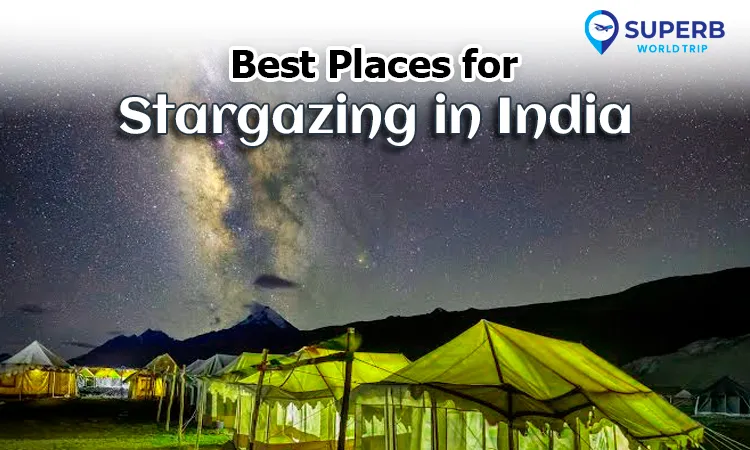
Best Places for Stargazing in India: Top Spots to Visit
Have you ever gazed at the sky from your city and wondered where the stars are?
In many cities, we only see some bright stars because of the lights in our streets, buildings, and pollution. However, if you go to a peaceful village or desert, the sky at night could appear completely different. If you’re lucky, you could observe hundreds of stars as well as the Milky Way and sometimes even shooting stars.
India has a number of spots where you can take in the night sky in this manner. There are some remote Himalayan locations where there is nearly no artificial light, and others are easier to reach and could be part of a regular weekend excursion.
It’s not necessary to know anything about astronomy as well. Find a dark spot, and then watch your eyes adjust and then look upwards. If you own binoculars or a telescope, it’s even better, but they’re not required.
If you’re searching for a spot to spend the evening with a stunning sky, here are a few of the most beautiful spots to watch the stars in India.
1. Hanle, Ladakh
If you’re traveling to view a black sky, Hanle ought to be at the top of your list.
Hanle is a tiny and remote village located in the Ladakh region’s Changthang region. It is far from the big cities and is largely devoid of artificial lighting, which makes a significant difference after the sun sets.
The region is also home to an Indian Astronomical Observatory. Hanle was recognized as the first Indian Dark Sky Reserve, which has drawn greater attention to the town in the eyes of astronomy enthusiasts.
This night’s sky isn’t exactly like the one you get from a city. If it’s clear, it is possible to see that the Milky Way can be seen in the sky, and you can even spend long hours sitting on the deck and enjoying the stars.
The trek to Hanle isn’t an easy one, as the altitude requires you to slow down once you’re there. However, if you’re contemplating a Ladakh trip and you have a fascination with astronomy, adding Hanle could make your trip significantly more memorable.
Best time to visit: Generally from June through September, based on the road and weather conditions
Great for serious travelers, astrophotographers, and stargazers who enjoy traveling to places far away
2. Spiti Valley, Himachal Pradesh
Spiti is among the locations where you feel a distance from everything. That is precisely what you desire when you’re searching for the dark sky.
This valley has mountains and small villages with only minimal artificial lighting once it gets dark. Some of the places like Kaza, Kibber, Langza, and Hikkim are well-known stops for tourists who wish to explore Spiti.
In the daytime, you can visit monasteries, travel on mountain roads, and wander through tiny villages. The valley at night gets extremely peaceful.
If the conditions are calm, venture out of your residence and allow your eyes the chance in order to get used to darkness. You’re amazed by the number of stars that appear.
Spiti is a good alternative if you love photography. The mountain ranges and villages provide interesting backgrounds to shoot night-sky photos.
The most important thing to remember is that Spiti is a high-altitude location. So the trip requires some planning. Try not to squeeze too much into one trip.
The best time to visit is from May through October, based on the road and conditions.
Great for road excursions, mountain enthusiasts, photography, and stargazing
3. Rann of Kutch, Gujarat
Stargazing from the middle of an uncolored salt desert is an entirely different experience.
The Rann of Kutch is known for its vast white landscape. However, after sunset, the scenery transforms completely. In the absence of light sources, the wide sky offers a vast perspective of the night sky.
Winter is a very popular time for visiting, as the weather is more pleasant than during the summer months. You can enjoy your time in the evening wandering around deserts, savoring the local cuisine and culture, and then return to the desert in the evening to enjoy watching the stars.
The Rann is also a great option if you don’t wish to drive to a higher altitude destination. It can be part of a bigger Gujarat excursion, and you can visit the places within Kutch in the daytime.
If you’re looking to take photos, you should carry a tripod. The flat salt landscapes can be stunning in long-exposure images with the stars atop them.
The best time to go: November through February
Ideal For: Desert travel, photography, and first-time stargazers
4. Pangong Lake, Ladakh
The majority of people go to Pangong Lake for its incredible blue waters and mountains surrounding it. However, if you stay overnight, you can discover a different side of the lake.
When it is dark, the absence of city lights surrounding the lake creates an ideal location to stargaze. The mountains create a natural backdrop, while the sky above could be awash with stars.
For photographers, Pangong can be especially good because you can use the mountains and the lake in night-sky photos.
Remember that Pangong is situated at a high altitude. It can be very cold at night even if the temperature is comfortable; therefore, wearing warm clothes is crucial.
I would not recommend going to Pangong just to stargaze. It is more sensible to include it in an overall Ladakh plan and stay overnight to take in stargazing at night.
The best time is usually from May through September, depending on the road and weather conditions.
Great for: Photography, Ladakh trips, and people who like mountains and stars
5. Jaisalmer, Rajasthan
There’s no need to go across the entire distance to Ladakh for a night of starry sky.
The desert area around Jaisalmer can be a great spot for stargazing. If you’re able to get away from the city lights, the open desert offers plenty of sky to gaze at.
The Sam Sand Dunes are particularly loved by tourists staying in camps in the desert. It is possible to stay in the evening, soaking up Rajasthani food and music, sitting around the campfire and then taking a break from the lights to admire the stars.
Certain camps also provide basic stargazing and telescope programs, but this will depend upon the particular camp that you pick.
The winter months are a good season to do this since winter nights in deserts can be chilly, but the daytime temperatures are far more comfortable.
If you’re planning to visit Jaisalmer and you’re planning to stay a night in the desert, it can be a great method to add stargazing to your journey.
The best time to be there is from October until February.
Great for families or couples, people who are first-time stargazers, and desert camping.
6. Kausani, Uttarakhand
Kausani, a tranquil hill station located in Uttarakhand, is known for its stunning peaceful surroundings and mountain views.
It’s not as far away as Hanle or Spiti; however, being away from the bustling cities makes an obvious difference once the night comes around.
One of the benefits of Kausani is that it also offers guided astronomy adventures. This is helpful when you’re not sure about the stars and constellations and would like someone to describe what you’re viewing.
Instead of merely gazing at the skies, a guide will guide you to various constellations and planets. It can also be based on the setup to allow you to observe objects with the telescope.
If you are a family traveling with kids, it could make stargazing more enjoyable than just standing in the sun and gazing up.
It is also possible to mix the trip into an ordinary Uttarakhand trip and take in the hills around in the daytime.
Ideal time: Clear, dry seasons; confirm the local weather before you travel.
Ideal for families as well as beginners, and guided astronomy experiences.
7. Coorg, Karnataka
Coorg is typically known for its coffee farms, hills with green vegetation, and waterfalls. However, if you choose to stay away from the more bustling areas of Madikeri, it is possible to have a peaceful night under the stars.
There is no need to organize a complex journey through astronomy. A stay in a home surrounded by landscapes or plantations is enough.
After exploring coffee estates and other nearby tourist attractions, you can relax outdoors in the peaceful environment.
The sky might not be as stunning as the one you’ll find in the remote region of Ladakh, but for people who live in Bengaluru or a large city, the differences can be striking.
Coorg is therefore a great option for those looking to mix stargazing and regular weekend getaways.
The best time to visit is from October to May, based on the weather and cloud conditions.
Ideal for weekend trips for couples, families, and travelers from South India
8. Matheran, Maharashtra
If you reside in Mumbai or Pune and don’t want to spend a lot of time traveling to an unreachable destination, Matheran is worth considering.
Matheran is a tiny hill station, surrounded by forest, and a car-free zone provides a more peaceful atmosphere as opposed to many hill towns.
There isn’t the incredibly deep dark sky of Hanle here, however; when you’re able to see clear skies from the brighter areas of town, you’ll still see more stars than from Mumbai.
The best way to experience it is to be realistic about your expectations. Imagine it as a peaceful hill-station excursion where stargazing is just one of the activities you can do at night.
Take a walk through the views and explore Matheran, and then locate an open space near your lodging after dinner.
The best time to go: October through May, subject to the weather conditions
Ideal for weekend trips and for travelers to and from Mumbai and Pune
9. Pachmarhi, Madhya Pradesh
Pachmarhi is another place worth considering if you are within central India.
Located in the Satpura Hills, Pachmarhi can be found in the Satpura Hills. It is covered with mountains, valleys, and forests. If you’re not in the main town and all of its lighting as well, the night sky could appear clearer.
It’s not a place that you must visit for the sake of astronomy. It is possible to spend the day exploring waterfalls, viewpoints, as well as other natural wonders and save the night to gaze at the stars.
If you’ve not experienced a truly dark sky, Pachmarhi is an ideal place to start without an arduous mountain trek.
Best time to visit: October to March
Ideal for families or short vacations, as well as travellers from central India
10. Neil Island, Andaman and Nicobar Islands
Stargazing doesn’t need to take place in the desert or mountains.
The Andaman Islands provide a totally different experience. Imagine sitting on the beach at sunset, with no artificial light and the stars that float above the water.
Neil Island, officially known as Shaheed Dweep, is quieter than the other well-known islands. It can be an ideal spot to take a break.
During the day,y you can visit beaches and take in the beauty of the island. In the evening, instead of immediately going inside, spend time outdoors and gaze up.
The sound of the ocean as background music adds to the enjoyment. enjoyable.
It’s not the first thing people think of when they hear stargazing. However, if you’re already making plans for an Andaman holiday, ay there’s no reason to overlook your night skies.
The best time to go: October through May, subject to conditions and cloud cover
Great for: Island getaways, couples and travelers seeking a relaxing evening
Which Is the Best Place for Stargazing in India?
It’s all about what you’re looking for from your journey.
If you are looking for the darkest and most intense stargazing experience, Hanle is the strongest option. The remote location, as well as its Dark Sky Reserve status, makes Hanle a distinct one from the typical hill station.
If you are looking for the stars and mountains, Spiti Valley and Ladakh are great choices.
If you want something unique, try one of the Rann in Kutch and Jaisalmer and enjoy the night sky in the night sky.
If you’re looking for something more manageable to squeeze into a weekend excursion, Coorg, Kausani or Matheran are more appropriate.
Here’s a quick comparison:
| It is easy to incorporate a Rajasthan trip | Best For | What Makes It Special |
| Hanle | Serious stargazing | Very dark skies, high altitude and dark skies |
| Spiti Valley | Mountains + stars | Rural villages and clear skies |
| Rann of Kutch | Desert stargazing | Huge open salt landscape |
| Pangong Lake | Photography | Lake mountains and stars |
| Jaisalmer | Camping in the desert | It is easy to incorporate an Rajasthan trip |
| Kausani | Beginners | Astronomy guided experiences |
| Coorg | Weekend trips | Plantations, hills and peaceful nights |
| Matheran | Mumbai/Pune travellers | Easy hill-station getaway |
| Pachmarhi | Central India | Darker, forest-covered hills and dark surroundings |
| Neil Island | Holidays on the island | Stars in the ocean |
When Is the Best Time for Stargazing in India?
There’s no one month that is better than all others.
The most important thing is to have an open sky and minimal cloud cover. The amount of moonlight affects visibility.
If you’d like to be able to see the Milky Way clearly, nights when the moon is new are typically more beneficial because the sky is considerably darker. The bright moon can make some of the fainter stars hard to spot.
For places like Ladakh and Spiti, the warmer months are typically the best time to travel, as winter can be extremely cold and have difficult travel conditions.
In Rajasthan and Kut, Chh, winter is more relaxing for spending a few hours outside at night.
Before leaving, be sure to verify the weather forecast as well as the moon’s phase. Even the best spot for stargazing will not be spectacular when the sky is cloudy.
Do You Need a Telescope for Stargazing?
No.
Actually, I would not recommend purchasing expensive equipment before you’ve even attempted stargazing.
A dark spot is more crucial when you’re just starting out. When your eyes adjust to darkness, you’ll be able to see more stars than you usually observe from the city.
Binoculars could be a good alternative because they’re affordable and simple to transport. If you’re interested in the field of astronomy, then you should look into purchasing a telescope.
Another alternative is to attend an astronomy-related session that is guided. You can utilize their equipment while someone explains the things you’re seeing.
How to Make Your Stargazing Experience Better
Small changes can make a significant impact.
Stay clear of lighting. Even a tiny amount of artificial light can decrease the number of stars you are able to see.
Give your eyes some time to adjust. Don’t expect to walk out and be able to see everything. Take a few minutes of darkness, if you can.
Avoid bright phone screens. They make it more difficult for your eyes to adjust.
Check the Moon. Bright moons are beautiful; however, they’re not ideal for those who want to observe faint stars and the Milky Way.
Bring warm clothes. The nights in the mountains can be colder than you think.
Find a comfy spot to relax. Stargazing can be better when you’re not standing in a circle for a long time.
The most important thing is not to hurry. One of the great things regarding stargazing is there’s no need to perform anything; you sit and enjoy the view.
Can You See the Milky Way From India?
Sure, it all depends a lot on where and when you are looking.
The Milky Way is much easier to spot from areas that have very little light pollution. In remote areas like Ladakh, Spiti and some desert regions could provide great conditions.
All conditions can be great. A bright moon or clouds could make it difficult to see.
If you’ve been in a big city and have never seen the Milky Way with your own eyes for the first time may be quite awe-inspiring. It’s no, itt exactly like the pictures you see on the web however the sheer amount of stars i;s amazin,g.
Final Thoughts
There is no need for an extravagant telescope or complex astronomy tour to appreciate your night skies.
Sometimes, all you require is a peaceful spot from the city lights.
Hanl,e along witSpitii is anre excellenchoicees if you’re looking for a serious sky-gazing adventure in the mountains. Ladakh provides stunning scenery as well as dark skies, and Jaisalmer, along with the Rann of Kutch provid, provides something unique with its desert.
If you are looking for a more relaxed journey, then places like Kausani, Coorg, Matheran and Pachmarhi offer you the opportunity to see a darker sky, without traveling far.r
Andiff you’re planning to travel to theAndaman Islandss, make sure you get out atnight; the islands’ beachesh might appear totally different when the lights come out.
It’s possible that’s the reason why stargazing can be enjoyable. There’s no rush to go to the next site or tick the items off of a list. You can just relax in your own space andlook too see how much sky you don’t get to observe from the comfort of your home.
Latest Post

15 Best Places to Visit in Georgia: Places You Should Not Miss

Best Places to Visit in Australia: Should Add to Your Travel List

15 Best Places to Visit in Greece: Should Not Miss

Best Places to Visit in Sri Lanka: 15 Beautiful Places to Add to Your Itinerary

Best Places to Visit in Switzerland: 15 Beautiful Places You Should Not Miss

Best Train Journeys in India: Scenic Routes to Explore
Best Places for Stargazing in India: Top Spots to Visit

Best Places for Paragliding in India: Top Destinations

Best Places for Scuba Diving in India: Top Spots to Explore

How to Reach Spiti Valley: By Road, Train & Air

How to Reach Badrinath: By Road, Train & Air

How to Reach Lakshadweep: By Flight and Ship

How to Reach Kedarnath: By Road, Train & Helicopter

How to Reach Andaman and Nicobar Islands

15 Top Places to Visit in Matheran: Viewpoints, Lakes & More

15 Top Places to Visit in Jhansi: Forts, Temples & More

15 Top Places to Visit in Srisailam: Temples, Nature & More

15 Top Places to Visit in Pachmarhi: Waterfalls, Caves & More

15 Top Places to Visit in Kodaikanal: Lakes, Hills & More