Best Time to Visit Kaziranga: A Seasonal Guide for an Unforgettable Wildlife Adventure
I’ll never forget that moment when our vehicle came to a sudden stop.
Initially, I thought there was something wrong with the car. Our guide pointed towards a patch of high elephant grass.
In a few seconds, an enormous elephant slowly emerged from the fog in complete silence. It was not rushing or hiding; it was simply strolling through its habitat.
There was a brief moment when nobody inside the vehicle spoke. Cameras were not in use, and even the usual excitement slowed down to a quiet.
The sight of such a majestic wild animal is one of the rare experiences that photography cannot completely capture.
When we drove further in the woods, we saw wild buffaloes in the wetland, a group of elephants grazing in their grasslands and many colourful birds flying overhead. When we returned, I asked our guide a straightforward question:
“Is it ever easy to spot wildlife in this area?”
He smiled and said,
“No… You arrived at the right moment.”
This question made me think about the fact that there is something newcomers don’t think about. The season you pick can totally alter the way you experience Kaziranga.
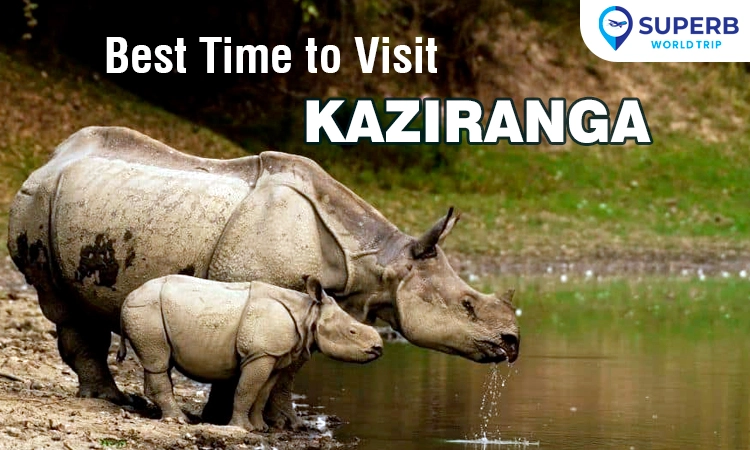
In the middle of Assam, Kaziranga National Park is among India’s top nature reserves and a UNESCO World Heritage Site. It is famous for its efforts to protect more than two-thirds of the population of the endangered one-horned rhinoceros. In addition to rhinos, the park is also where you can see Bengal tigers, Asian elephants and wild buffaloes, as well as swamp deer and more than 500 species of birds.
However, Kaziranga isn’t always the same throughout the year.
The winter months are a pleasant time with fantastic conditions for safari. The summer months are a great time to see wildlife within shrinking water bodies.
During the monsoon, the Brahmaputra River floods huge portions within the park, altering the landscape but also creating closures during the summer months.
When is the ideal time to go to Kaziranga National Park?
The answer will depend on the goals you have for your journey. Do you want to see rhinos from the safari of elephants?
Are you dreaming of seeing a tiger roaming in the wild? Are you looking for the perfect weather for your family’s vacation? Are you a birdwatcher looking forward to the migratory species’ arrival showing up?
With this article, I’ll show you how to pick the right season based on the weather conditions, as well as wildlife sightings, safari options and the kind of experience you’re seeking.
Best Time to Visit Kaziranga National Park
If you’re planning your first visit and want to make it a memorable one, the best time to go to Kaziranga National Park is between November and April.
In those months, the climate stays comfortable, the park is accessible to visitors, and wildlife encounters are at their highest.
The grasslands are more accessible, wildlife congregate around the wetlands, and the conditions for a safari are excellent.
The temperatures during this time of year generally fluctuate between 10°C and 28°C. This makes jeeps and elephant safaris enjoyable.
Many wildlife photographers who are experienced enjoy this time because the light and clear skies, combined with gentle morning light, provide ideal photographic conditions.
If your objective is to spot the one-horned rhinoceros that is famous for elephants or migratory birds, this is the ideal time to plan your trip.
Kaziranga in Winter (November to February)
If I were asked to suggest only one season to visit Kaziranga, I would not need long to think about it.
The experience of winter is completely different.
The mornings start with a light layer of mist covering the grasslands, and when the sun rises slowly, the landscape is alive.
Birds call in every direction, and herds of deer wander in peace, and rhinos are often seen eating in open areas prior to when the sun begins to warm up.
In contrast to other wildlife spots that require you to search for hours for wildlife, Kaziranga often rewards patient visitors with a variety of sightings on one safari.
In my drive in the morning, I felt that every turn was a new discovery: a rhino near a marsh, wild buffaloes knee-deep in the water, and a group of elephants vanishing into the thick grass.
The mild weather makes winter the perfect time to go out and explore without fatigue.
Weather
- Temperature: 10°C to 25°C
- Cool evenings and cool mornings
- A pleasant afternoon
- Low humidity
Why Visit During Winter?
- The best time to go on jeep as well as elephant safaris.
- The best chance to spot one-horned rhinos.
- Season of peak migration for migratory birds.
- It is comfortable for families as well as seniors.
- The perfect lighting to capture wildlife photos.
Kaziranga in Summer (March to April)
The majority of people believe that summer isn’t the best time to take a safari due to the increasing temperatures. I believed the same before our tour guide pointed to an insignificant water body and told us, “Keep watching.”
In a matter of minutes, an animal appeared out of the tall grass and was followed by a wild buffalo and several deer. As the day became warm, more creatures congregated in the areas of sources of water. This is when I realised why the majority of wildlife photographers aren’t bothered by the scorching heat.
The summer in Kaziranga is short, as the park typically closes prior to the monsoon beginning. Although afternoons can be hot, morning safaris can be pleasant and usually provide great sightings of wildlife.
Weather
- Temperature: 20°C to 32°C
- The afternoons are warm and sunny.
- Beautiful mornings
Why Visit During Summer?
- Great chance to spot rhinos.
- Animals congregate near the waterholes and wetlands.
- There are fewer tourists than in the peak winter.
- Fantastic opportunities to photograph wildlife.
Travel Tips
- Make reservations for one of your safaris.
- Dress in light cotton.
- Take a bottle of water to drink.
- Apply sunscreen and wear an e-cap.
Kaziranga in Monsoon (May to October)
A driver from the area once shared with me an interesting fact:
“Kaziranga does not sleep in the monsoon; it simply belongs to nature once more.”
After a while, I knew exactly what he was saying.
The heavy rains of the Brahmaputra River transform the park into an enormous green expanse. The wetlands are enlarged, rivers overflow, and animals slowly shift to higher ground. The view is breathtaking; however, it’s one of the reasons Kaziranga National Park remains closed to tourists during the majority of the monsoon period.
The annual flood is crucial to the ecosystem of the park. It helps replenish wetlands, provides new vegetation, and aids in maintaining the diversity, which is what makes Kaziranga unique.
While safaris aren’t available at this time of year, the surrounding area is stunningly beautiful.
Weather
- Temperature: 24°C to 33°C
- Heavy rain
- High humidity
Why Visit During Monsoon?
- Beautiful green landscapes.
- Natural scenery that is refreshing.
- The tranquillity of the park is a bonus.
- A great time to discover Assamese culture close by.
Things to Remember
- Safari operations are shut.
- The heavy rain can affect travel on roads.
- Make sure you have waterproof clothes.
- Make sure to check reopening dates prior to planning your excursion.
Here is the month-by-month guide to Visiting Kaziranga
The best month to choose is dependent on your travel plans. Here’s a quick overview.
November
The park is reopened following the monsoon, and the scenery is lush and green.
Best For:
- First-time visitors
- Safaris in the wild
- Nice weather
December
The most sought-after months are for cool weather and great conditions for a safari.
Best For:
- Families
- Photography
- Birdwatching
January
Cold mornings produce beautiful fog-covered landscapes that make every safari seem magical.
Best For:
- Rhino sightings
- Birdwatching
- Families
February
Wildlife remains very active, and temperatures are extremely comfortable.
Best For:
- Couples
- Photography of wildlife
- Jeep safaris
March
The weather begins to warm, and wildlife is seen more frequently in wetlands.
Best For:
- Rhino photography
- Wildlife enthusiasts
April
One of the final months before the closure of the season.
Best For:
- Rhino sightings
- Elephant safaris
May to October
The park is closed due to the effects of the annual monsoon as well as floods.
Best Time to Spot the One-Horned Rhinoceros
If the famed Indian one-horned rhinoceros is the primary reason for travelling to Kaziranga, plan your trip between December and April.
During this time:
- Grasslands get easier to explore.
- Wetlands draw wildlife.
- Morning safaris are a great way to see the world.
- Rhinos can be seen frequently wandering through open spaces.
In contrast to other wildlife destinations which rely heavily upon luck, Kaziranga provides one of the best chances to see rhinos living in their original surroundings.
Best Time for Birdwatching
Kaziranga is an ideal spot for bird lovers.
The best time for this is from November through February, when many migratory birds come to Central Asia and Europe.
You may spot:
- Bar-headed Goose
- Ruddy Shelduck
- Pelicans
- Storks
- Eagles
- Kingfishers
- Hornbills
- Fishing Eagles
Morning safaris in the early morning are usually the most enjoyable for birdwatchers.
Elephant Safari vs Jeep Safari
Before my trip, I could not decide which safari to go on. After trying both, this is what I found.
Elephant Safari
If you’ve always wanted to observe rhinos at close distance, an elephant safari is an experience unlike any other. While cruising across the open grasslands, elephants are able to access areas that vehicles can’t, providing intimate encounters with wildlife.
Best For:
- Rhino sightings
- First-time visitors
- Nature lovers
Jeep Safari
A jeep safari covers a vaster area, which increases your chances of seeing a variety of species like wild buffaloes, elephants, deer, and even tigers.
Best For:
- Photography of wildlife
- Families
- Exploring different safari ranges
If your budget and time permit, I suggest you go on both. Each provides a totally different perspective on Kaziranga.
Safari Timings
Safari times may differ slightly in accordance with the season.
Jeep Safari
Morning: 7:00 AM – 9:30 AM
Afternoon: 1:30 PM – 3:30 PM
Elephant Safari
Typically, the hunt takes place in the early morning, when wildlife is active and the temperature is cool.
The booking of your safari well in advance is strongly recommended, particularly in the tourist season that runs from December until February.
Read similar content
Latest Post

15 Best Places to Visit in Georgia: Places You Should Not Miss

Best Places to Visit in Australia: Should Add to Your Travel List

15 Best Places to Visit in Greece: Should Not Miss

Best Places to Visit in Sri Lanka: 15 Beautiful Places to Add to Your Itinerary

Best Places to Visit in Switzerland: 15 Beautiful Places You Should Not Miss

Best Train Journeys in India: Scenic Routes to Explore

Best Places for Stargazing in India: Top Spots to Visit

Best Places for Paragliding in India: Top Destinations

Best Places for Scuba Diving in India: Top Spots to Explore

How to Reach Spiti Valley: By Road, Train & Air

How to Reach Badrinath: By Road, Train & Air

How to Reach Lakshadweep: By Flight and Ship

How to Reach Kedarnath: By Road, Train & Helicopter

How to Reach Andaman and Nicobar Islands

15 Top Places to Visit in Matheran: Viewpoints, Lakes & More
15 Top Places to Visit in Jhansi: Forts, Temples & More

15 Top Places to Visit in Srisailam: Temples, Nature & More

15 Top Places to Visit in Pachmarhi: Waterfalls, Caves & More

15 Top Places to Visit in Kodaikanal: Lakes, Hills & More